August 11, 2026
Creating a Clear Path for Hopi Veterans to Find Support
How Geno Talas and Hopi partners are turning local knowledge, trusted relationships, and coordinated action into a clearer pathway to support
At the first-ever Be Connected Communities Academy on February 25, Geno Talas brought forward a practical and urgent challenge. As the leader of Hopi Veterans Services, Geno knows that many programs, agencies, and caring professionals are already working to support veterans. He also knows that, from the perspective of a veteran or family member seeking help, those resources can still feel distant, fragmented, or difficult to navigate. Geno’s vision is to build stronger bridges between Hopi veterans and the organizations and resources available to support them.
After Geno shared his vision, the Academy project team began shaping the effort. Together, they defined their mission: “Bridge veteran-supporting organizations so there is a streamlined process to support the veteran in a crisis.” Through further collaboration and discussion, the project team articulated three goals:
- Increase access to care.
- Increase access to support.
- Increase collaboration.
That plan became the foundation for the Hopi Veterans Pathway Project, a community-driven effort to make the route to support clearer and more reliable for Hopi service members, veterans, and their families, and to strengthen community trust in the organizations working together to serve them.
The Academy was designed to help communities move beyond discussion and launch locally developed projects across Arizona. Geno and the Hopi team have done exactly that. They have taken a broad concern, veterans in need of support may not know where to begin, and turned it into actionable work in the local community involving local leadership, partner coordination, and clear pathway mapping.
The Route is Unclear
The challenge Geno identified was not simply a lack of services. Veteran support can involve the U.S. Department of Veterans Affairs, Indian Health Service (IHS), tribal programs, behavioral health providers, social service agencies, and veteran service organizations.
Each may offer an important part of the solution. Yet the existence of those resources does not automatically create a clear route between them.
A veteran may not know which office to contact first. A family member may recognize that something is wrong but be unsure whom to call. A community partner may make a referral without knowing what will happen after the handoff. When the process is unclear, people may have to repeat their story, contact multiple organizations or wait without understanding the next step.
For veterans who have had a disappointing experience with a system, uncertainty can make it harder to reach out again. Geno wants Hopi veterans and families to know where to turn, what to expect after the first contact, and how support will continue from one step to the next.
The Hopi Veterans Pathway Project is focused on making existing support easier to find, understand, trust, and use.
Actionable Work
Geno and his partners made a commitment to each other and the community that the project would not simply remain an idea on paper. After the Academy, the team began meeting every two weeks to review progress, make decisions, and finalize plans. These checkpoints were crucial in gaining the momentum needed to transform the idea into action and that action into results.
- When finding a single standing time became difficult, the group adapted by scheduling the next meeting before each session ended.
- Between meetings, members exchanged updates by email and revised shared working documents together.
- Not every idea became part of the project, but every suggestion was considered, and many led to stronger solutions.
That cadence became one of the project’s strengths. Consistent communication converted enthusiasm into sustained movement. Team members knew what they were responsible for, followed through on assignments, and continued refining the work between meetings.
The team also created a concrete launch plan. Early tasks included:
- Identifying key partners.
- Preparing materials.
- Establishing a community of practice in support of veterans in need.
- Organizing a collaborative working session to map both the current route to support and a clearer future pathway.
This is the progression the Be Connected Communities Academy was intended to create. The Academy provided the catalyst, but Geno and the Hopi community shaped the response. A community concern became actionable when it was translated into a pathway, a process, and a plan.
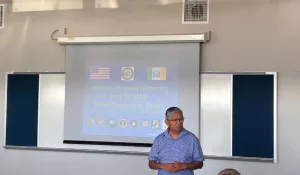
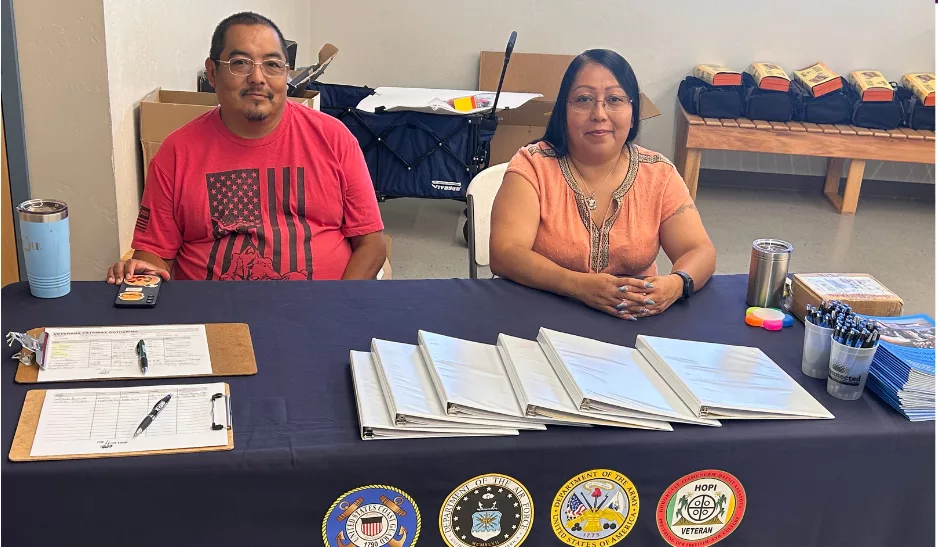
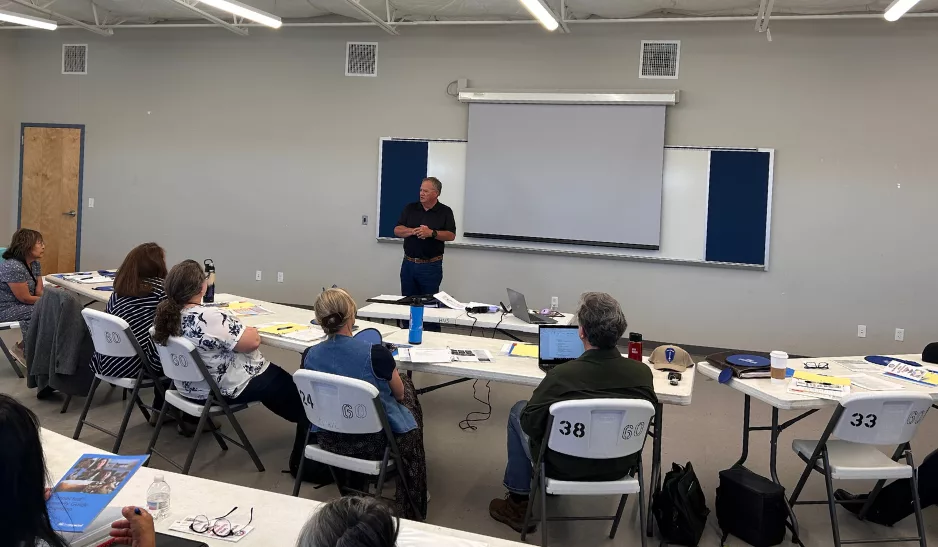
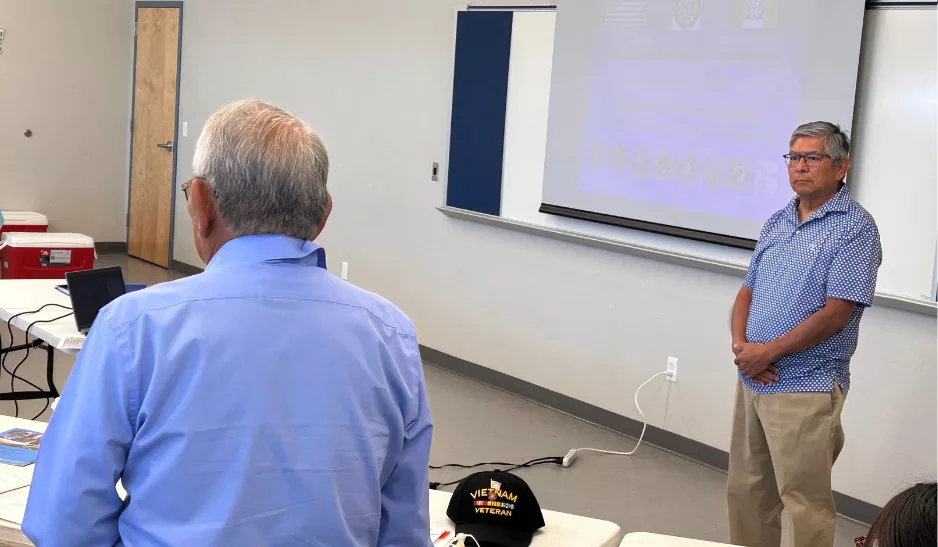
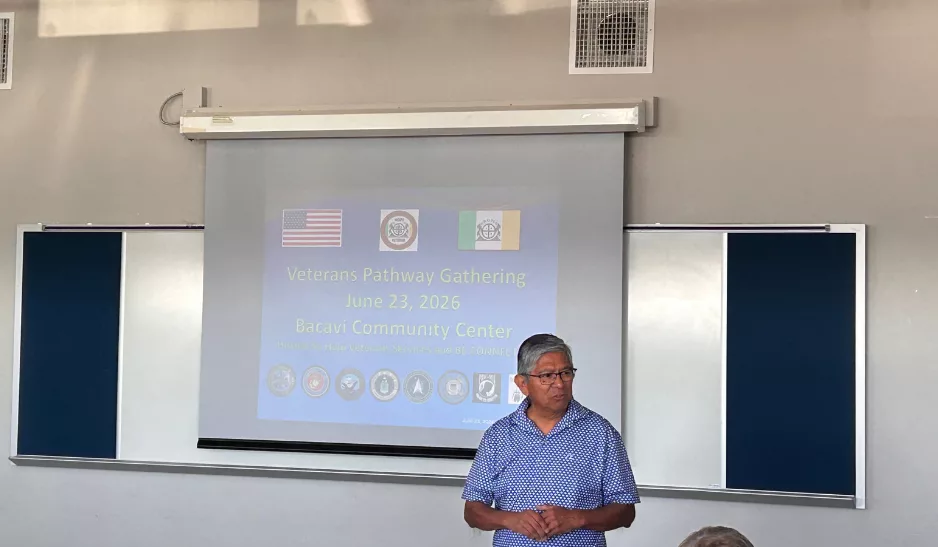
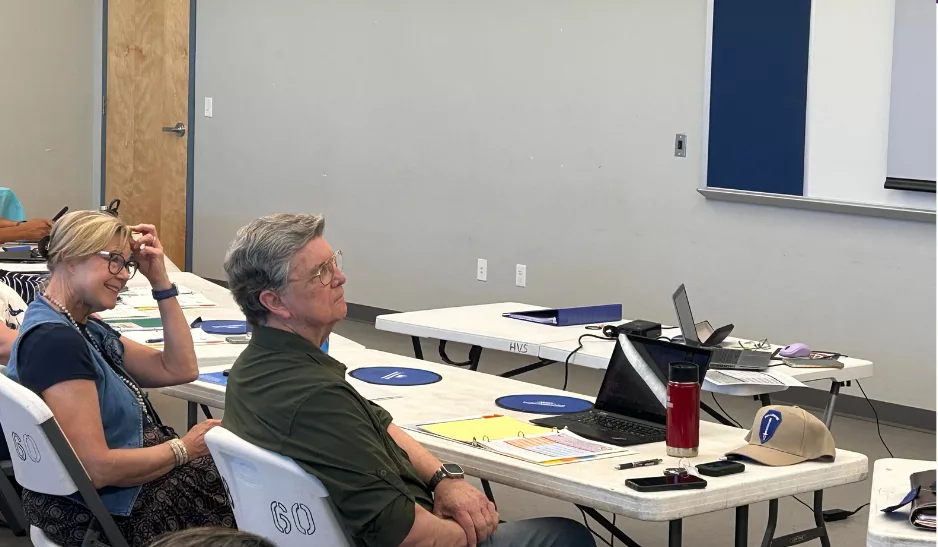
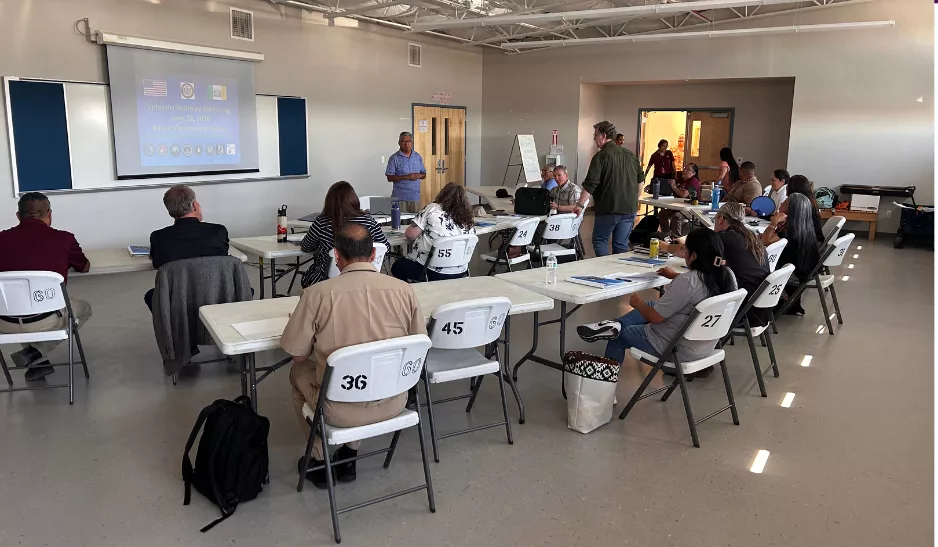
Photos from the Gathering
Mapping the Pathway
A major milestone was the Hopi Veterans Pathway Gathering, hosted by Hopi Veterans Services in partnership with Be Connected Communities. It brought together tribal leaders, health care and behavioral health providers, social service agencies, law enforcement, veteran-serving organizations, and representatives from VA and IHS.
Participants represented organizations including:
- Arizona Department of Economic Security
- Hopi Behavioral Health
- Hopi Health Care Center
- Hopi Law Enforcement
- Hopi Social Services
- Indian Health Service
- Nation’s Finest
- Northern Arizona VA Health Care System
- Terros Health
- The NARBHA Institute
- The Vet Center
- VA HUD-VASH
Geno and the project team asked participants to examine the veteran’s experience from the moment a need is identified through connection to services and follow-up.
The group worked through two important entry points.
What happens when a veteran reaches out directly?
- How does the veteran know whom to contact?
- When can the organization respond quickly?
- What happens if the office is unavailable?
- What does the organization do first, and what happens next?
- Is the process effective, and what may be missing?
What happens when someone else reaches out on behalf of a veteran?
- How does that person find the right contact?
- How does the receiving organization respond?
- What additional partners might be needed to address the veteran’s needs?
By walking through those questions step by step, the group began making an often-invisible process visible. Participants could identify where the current system works well, where a handoff may become confusing, and where follow-up needs refinement.
That work benefits service members, veterans, and families, while strengthening the organizations involved. Partners gained a clearer understanding of one another’s roles, how to make stronger referrals, and what a reliable handoff requires to prevent frustration, missed connections, and uncertainty about who is responsible for the next step.
The group recognizes that no single organization can be the entire pathway. The value lies in understanding how each role connects to the others and what the group can do collaboratively to address the full range of a veteran’s needs. Hardship does not recognize organizational boundaries. A challenge that begins with housing may also affect food, utilities, transportation, health care, employment, and family stability. Those needs do not belong neatly to one organization or another, and veterans should not have to untangle multiple systems while they are already under strain. The purpose of the pathway is to connect the partners around the person, so each organization can contribute its part without losing sight of the whole.
Pathway Mapping Worksheets
Participants used these worksheets to map the experience from first contact through referral, follow-up, and evaluation.
Trust is Infrastructure
One of the most important ideas within Geno’s vision for the Hopi Veterans Pathway Project is that trust is not separate from access. Trust is part of how access works.
Large systems can feel distant, especially when the process is unfamiliar or a previous experience did not go well. A trusted local person, office, or organization can serve as a bridge between a veteran and a broader network of support. Hopi Veterans Services fills that kind of local role because it is rooted in the community and understands the relationships and conditions around how support is sought and received.
Trust also depends on reliability. It grows when someone answers, explains the next step, makes a thoughtful connection, and follows up. It grows when veterans and families do not feel as though they have been handed a phone number and left to navigate the rest alone.
For Geno, a clear pathway is more than a directory of services. It must show how people connect, who helps them move forward, and what they can expect along the way. A strong pathway serves as both a process map and a relationship map.
Building for Hopi Realities
A pathway that looks orderly on paper will not help if it does not work under real-world conditions. Geno and his partners have kept Hopi realities in view throughout the planning process. This people-first approach allows local knowledge to shape the project rather than asking the community to fit into a generic process designed somewhere else.
Geno and the team reflected on the realities that shape access in the community.
- Travel distances can be long. Transportation may be limited.
- Weather and road conditions can affect whether someone can reach an appointment.
- Internet reliability and power outages can interrupt communication.
- There are fewer service locations than veterans would find in an urban area.
These conditions affect how people learn about support, make contact, find options, and receive follow-up. A referral must account for whether the service can realistically be reached and used.
The project’s early planning reflected that practical focus. The team considered information sheets, frequently asked questions, and several ways to share information, including in-person communication, talking circles, newsletters, media, flyers, mail, and email. The objective is not to assume that one channel will reach everyone. It is to create clear, culturally responsive access points connected to a consistent process behind the scenes.
Shared Ownership
The Hopi Veterans Pathway Project is not a one-time event or a finished product created in a single meeting. Geno and the team understand that the first version will be a starting point.
The most immediate successes are already evident. Geno has helped bring the right partners into the room. The team has established a disciplined meeting cadence. Organizations are learning more about one another’s roles. Participants have begun mapping the real experience of asking for help rather than assuming how the system works.
New relationships have formed, and the project has moved from a broad concern to a shared design process. These are not merely planning activities. They are the infrastructure required for a more connected and responsive system of care.
The team is choosing action over waiting for a perfect solution. Each gathering, worksheet, discussion, and draft provides information that can improve the pathway.
Continued conversations with partners, along with input from veterans and families, can reveal what is clear, what is challenging, and what must change.
The project plan also includes an evaluation process intended to help the team determine whether the pathway creates stronger connections over time.
Community-Driven Action
The Hopi Veterans Pathway Project offers a practical lesson for other communities working to support service members, veterans, and their families: start with the community, not with a template.
The Be Connected Communities Academy gave Geno and the Hopi team a place to define the challenge and imagine a different experience. Their work since then shows what happens when that vision is carried forward with consistency, shared responsibility, and local leadership.
For a veteran in need, the most important question is not how many resources exist somewhere in the system. It is whether the path to those resources is clear at the moment they are needed.
Geno Talas and the Hopi Veterans Pathway partners are working to make that path visible so veterans, families, and community partners can see where to begin, understand what comes next, and move toward support with greater trust and confidence.
The Hopi Veterans Pathway Project is not finished, and that is part of its value. What Geno and his partners have accomplished in only a few short months offers an important lesson for other communities: meaningful change does not require waiting until every answer is known or every detail is perfect. It begins with trusted leadership, willing partners, and the courage to take the first practical step, learn from it, and keep moving forward. The Hopi team continues to build the pathway, listen to feedback, and improve the work. Their effort serves as a lesson to help others working in the community to support service members, veterans, and their families: begin where you are, build with the people who know the community best, and let progress, not perfection, create the path.