November 12, 2026
Be Connected and TSMC Arizona: Supporting Veterans Together
A strong start after military service takes opportunity, connection and support. That shared commitment is at the heart of Be Connected’s partnership with TSMC Arizona—and a recent story in the Glendale Star highlights how we’re putting it into action.
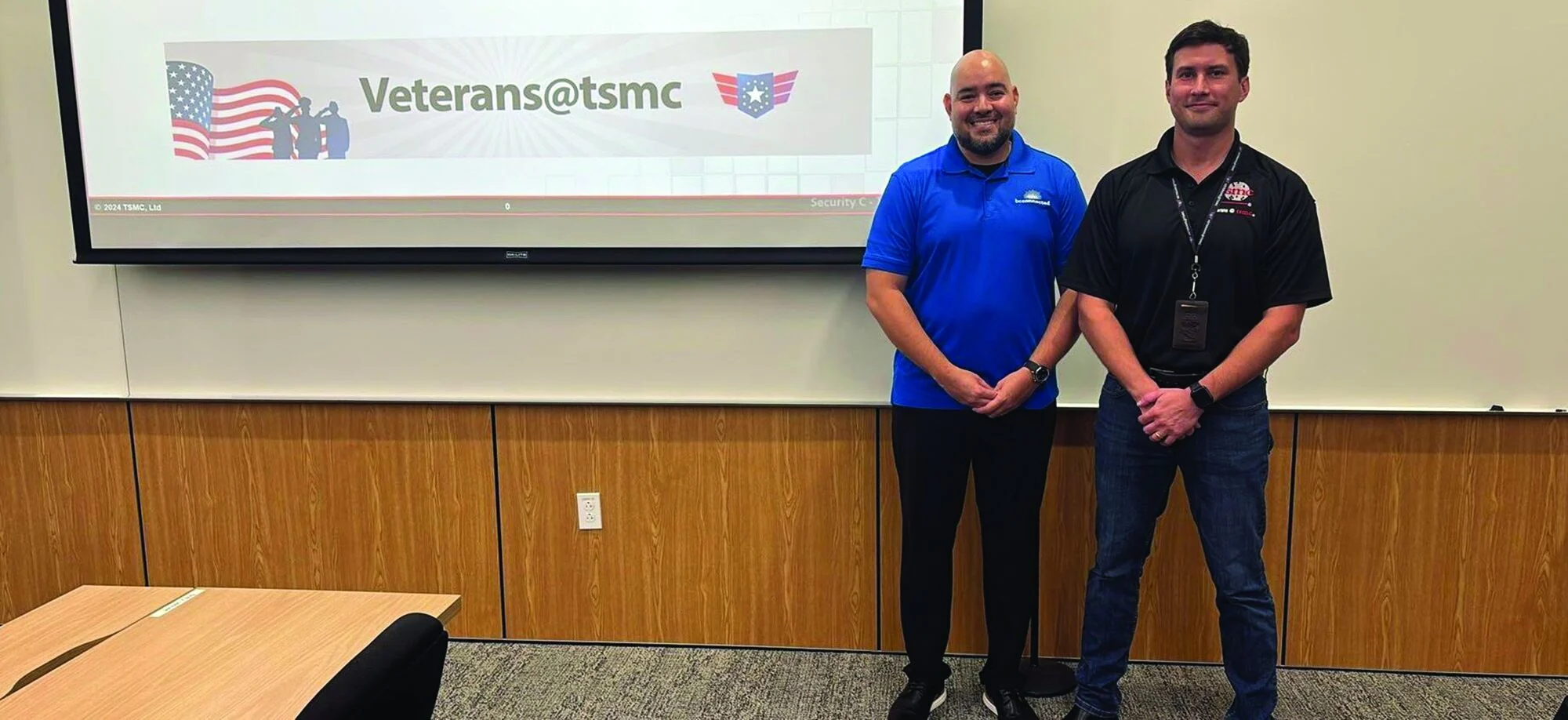
Army veteran Bobby Sobeski brought his military leadership and teamwork experience to a new career at TSMC Arizona through a SkillBridge opportunity. Today, he also helps fellow veterans explore opportunities and build connections as chair of the company’s Veterans Employee Resource Group.
The story also looks beyond employment. Through a $25,000 grant to the Arizona Coalition for Military Families, TSMC Arizona is supporting emergency assistance for veterans and military families. This funding helps Be Connected respond when challenges involving housing, finances and other essential needs arise.
By Jimmy Van Wickler, Glendale Star Staff Writer Nov 12, 2026
TSMC Arizona helps veterans transition careers
For U.S. Army veteran Bobby Sobeski, leaving the military after nearly eight years of service did not mean leaving behind the leadership, teamwork and sense of purpose that defined his military career.
Instead, those experiences helped prepare him for a new mission in Arizona’s growing semiconductor industry.
Sobeski, a former infantry officer and graduate of the U.S. Military Academy at West Point, now works as a process integration engineer at TSMC Arizona, where he applies skills developed during his military service to semiconductor manufacturing.
“I was not interested in leaving the military as much as I was interested in joining what’s going on here at TSMC,” Sobeski said.
As Veterans Day approaches Nov. 11, TSMC Arizona is expanding its efforts to support veterans through veteran-focused hiring events, employee support programs and a $25,000 grant to the Arizona Coalition for Military Families.
The company employs more than 3,500 people and plans to hire approximately 2,500 additional engineers and technicians by 2030 to operate its first three semiconductor fabrication facilities, according to TSMC Arizona.
Sobeski began his military career by enlisting in the Army before attending West Point, where he earned a degree in electrical engineering.
After graduating, he became an infantry officer stationed at Joint Base Lewis-McChord in Washington, serving in units focused primarily on operations in the Pacific.
During his military career, Sobeski led infantry rifle and reconnaissance platoons of approximately 40 to 45 soldiers and gained experience managing logistics for a battalion of about 600 soldiers.
His assignments also took him overseas, including deployments to South Korea and Thailand.
When he learned TSMC was establishing manufacturing operations in the United States, he began considering opportunities outside the military.
He eventually connected with TSMC Arizona through the Department of Defense’s SkillBridge program, which allows eligible service members to gain civilian work experience while transitioning out of the military.
Sobeski became TSMC Arizona’s first SkillBridge intern, completing a four-month internship before receiving a full-time job offer.
“SkillBridge was really helpful in kind of showing that I could be of value to the company,” Sobeski said.
Today, Sobeski helps coordinate semiconductor manufacturing processes, reviewing production data and working with teams to improve chip performance and efficiency.
Although his technical responsibilities differ from leading soldiers, Sobeski said many principles remain the same.
“The team player mindset has been one of the most valuable things I’ve carried with me,” Sobeski said.
Beyond his engineering responsibilities, Sobeski serves as chair of TSMC Arizona’s Veterans Employee Resource Group, which helps veterans build relationships, explore career opportunities and access community resources.
The group also organizes outreach efforts and connects transitioning service members with organizations providing employment assistance.
“Even if you’re not interested in TSMC, we still genuinely want to see veterans succeed in the next chapter of their lives,” Sobeski said.
Sobeski said more than 150 veterans attended an Oct. 3 hiring event, where participants met with hiring managers and explored available positions.
Another event is scheduled for Nov. 14 at TSMC Arizona’s north Phoenix facility.
According to TSMC Arizona, veterans’ experience operating sophisticated machinery, following precise procedures and working in around-the-clock environments can translate into semiconductor manufacturing careers.
While engineering positions require college degrees, technician positions do not.
Veterans attending the invitation-only event can interview for available positions or explore free technician training programs.
The company offers intensive technician courses lasting five to 16 weeks through partnerships with Arizona colleges and universities.
It also provides registered apprenticeships lasting 12 to 18 months, allowing participants to earn hourly wages and benefits while completing technical instruction.
Applications are open for training programs beginning Jan. 4, 2027.
Sobeski encouraged veterans interested in attending the event to research the company and consider how their military experience could translate into semiconductor manufacturing.
“Don’t be shy about talking about exactly what you did,” Sobeski said. “Talk about all the challenges that you faced and overcame.”
Veterans interested in attending the hiring event must complete a questionnaire and submit their resumes at tsmcaz.info/m/technicianpathways.
While employment can provide financial stability and renewed purpose, transitioning to civilian life can present significant challenges.
Nicola Winkel, project director at the Arizona Coalition for Military Families, said veterans frequently encounter difficulties involving employment, housing, finances and essential services.
“We know from data that it is a high-risk time,” Winkel said. “They are making a huge transition not only in their life but also in their career.”
The coalition’s Be Connected program helps service members, veterans and their families navigate available resources and address challenges before they become crises.
To support those efforts, TSMC Arizona awarded the coalition a $25,000 grant to provide emergency assistance to veterans and military families.
“Having funds like the TSMC program allows us to be responsive to those situations,” Winkel said.
The coalition expects the funding to assist dozens of veterans and families over the course of a year, depending on individual needs.
Winkel said partnerships between employers, government agencies and nonprofit organizations create a broader support network that helps veterans establish long-term stability.
For Sobeski, transitioning into semiconductor manufacturing has provided more time with his family while allowing him to contribute to a mission he considers important.
As Veterans Day approaches, he said the holiday offers an opportunity to reflect on military service and the sacrifices made by service members.
“It’s a chance to really appreciate the peace and the prosperity that we have in the U.S.,” Sobeski said.